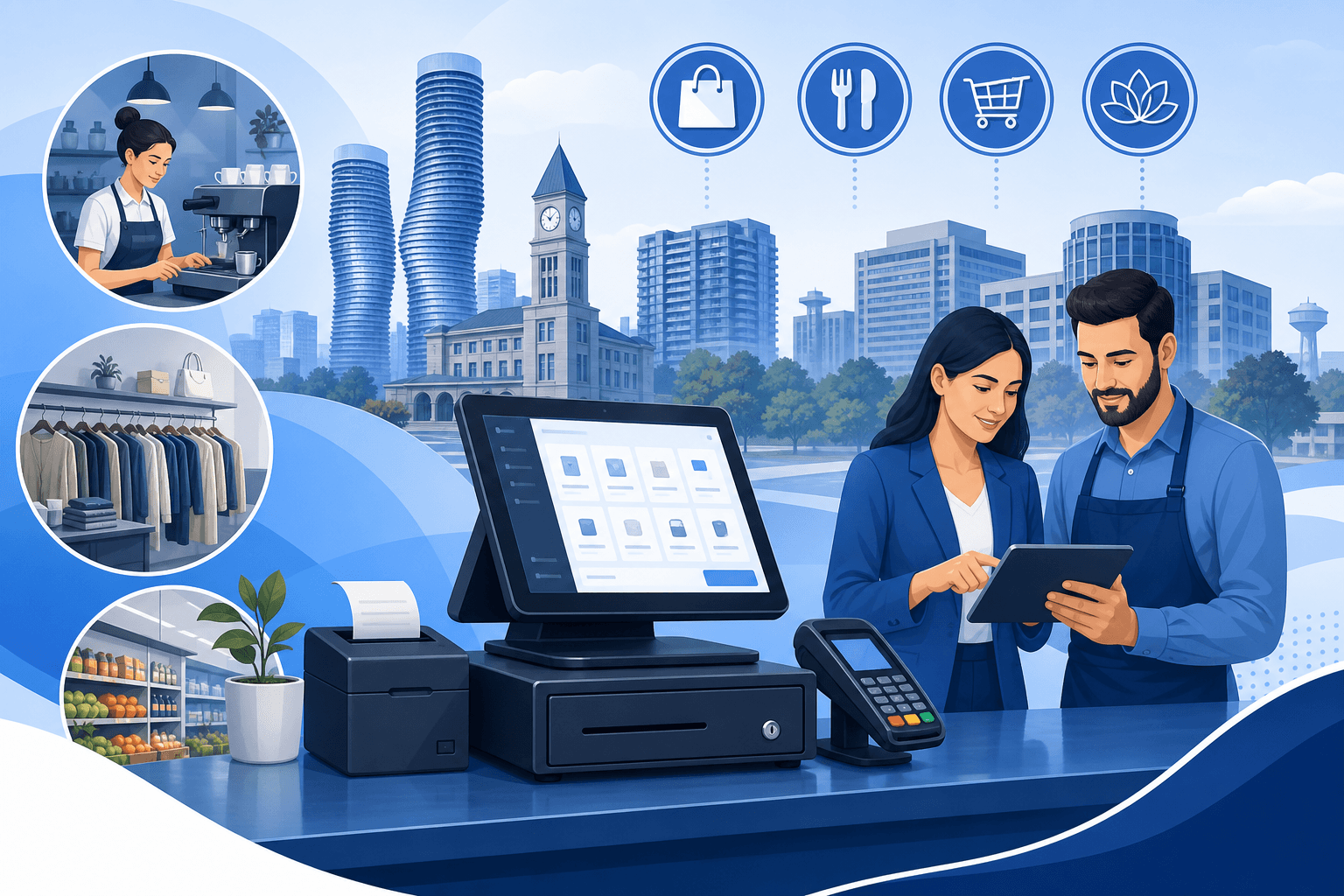
Why Mississauga and Brampton Businesses Need the Right POS System
Mississauga and Brampton are two of the fastest-growing business hubs in the Greater Toronto Area, home to everything from bustling restaurants along Square One and Trinity Common to independent retailers, salons, auto shops, and healthcare clinics serving diverse, growing communities. If you're running a business in either city, you already know the local market is competitive and customers expect fast, seamless checkout experiences - whether they're tapping a debit card, paying with a smartphone wallet, or booking online.
Choosing the right point-of-sale (POS) system isn't just about ringing up sales anymore. A modern POS system needs to handle inventory, staff scheduling, customer loyalty programs, and integrated payment processing, all while keeping your fees reasonable and your data secure. For business owners searching for a pos system mississauga brampton businesses can actually rely on, the decision comes down to finding a solution built for local realities: bilingual customer bases, seasonal foot traffic swings, and the need for fast, local support when something goes wrong.
At PaymentsPlus, we work with dozens of businesses across the GTA every month, helping them move away from clunky, overpriced systems toward POS solutions that actually fit how they operate. This guide breaks down what to look for, what to avoid, and how to make a smart, cost-effective choice for your Mississauga or Brampton business.
What Makes POS Needs Different in Mississauga and Brampton
While POS technology is broadly similar across Canada, local business conditions in Mississauga and Brampton create some specific considerations.
A Diverse, Multicultural Customer Base
Both cities have large South Asian, Caribbean, and multicultural communities, along with steady immigration-driven population growth. This means:
- Businesses often need multi-currency or multi-language receipt support
- Restaurants and grocery stores may need flexible tax configurations for varied product categories
- Customer loyalty and gift card features matter for repeat business in tight-knit community markets
High Growth, High Competition
Mississauga is Canada's sixth-largest city, and Brampton is one of the fastest-growing municipalities in Ontario. New businesses are opening constantly, especially in retail plazas, strip malls, and mixed-use developments. That growth means:
- Competitive pricing on processing fees is essential to protect margins
- Businesses need POS systems that scale - from one location to multiple locations
- Fast onboarding matters when you're trying to open your doors quickly
Proximity to Toronto Without Toronto Pricing
Many Mississauga and Brampton businesses compete with larger Toronto payment processing providers but don't want to pay big-city premiums. Local and regional processors that understand the GTA corridor can often offer better rates and more personalized service than national call centers.
Key Features to Look for in a POS System
Not all POS systems are created equal. Here's what to prioritize when evaluating options for your business.
1. Integrated Payment Processing
Your POS should connect directly to your payment processor so transactions, refunds, and reporting all live in one place. Disconnected systems lead to reconciliation headaches and higher error rates. Look for providers offering transparent, interchange-plus pricing rather than hidden markups.
2. Inventory and Sales Reporting
Real-time inventory tracking helps prevent stockouts and overordering - critical for retail shops and restaurants alike. Good reporting tools also help you spot your best-selling items and slowest periods, so you can staff and order more strategically.
3. Hardware That Fits Your Space
Whether you need a compact countertop terminal, a mobile card reader for a food truck, or a full multi-terminal setup for a busy restaurant, your hardware should match your actual workflow - not force you into someone else's template.
4. Support for Canadian Compliance and Currency
Make sure your POS system is fully PCI-compliant and processes transactions in CAD by default, with proper support for Canadian tax rates (HST in Ontario) built into the reporting and receipt structure.
5. Reliable Local Support
When your POS goes down during a Saturday rush, you need a real person to call - not a ticket queue. Ask any provider how fast they respond to service issues and whether support is based in Canada.
Popular POS Options Compared
There are several major POS platforms used by Mississauga and Brampton businesses today, and each has tradeoffs worth understanding before you commit.
- Clover - A popular, flexible option for retail and restaurants with a wide app marketplace. See our full Clover comparison for pricing and feature breakdowns.
- Lightspeed - Strong for retail and hospitality businesses needing detailed inventory and multi-location management. Check our Lightspeed comparison for details.
- Bank-bundled terminals - Often tied to a business bank account, these can come with rigid contracts and higher fees. Our TD comparison breaks down what bank-bundled processing actually costs.
- Stripe-based setups - Great for e-commerce-heavy businesses, though flat-rate pricing can cost more at higher volumes. See our Stripe comparison for the full picture.
If you're unsure which platform fits your business model, you can compare processors side-by-side before making a decision.
Industry-Specific Considerations
Different types of businesses in Mississauga and Brampton have different POS priorities.
Restaurants and Cafés
Table management, split billing, and online ordering integration are essential. Look for systems built specifically for food service - our restaurant solutions page covers what to prioritize for quick-service and full-service dining.
Retail Stores
Barcode scanning, inventory syncing across multiple SKUs, and loyalty program integration matter most. Explore our retail solutions for retail-specific POS and payment setups.
Salons and Spas
Appointment booking integration paired with POS checkout streamlines the customer experience significantly. Our salon & spa solutions page outlines POS features built for appointment-based businesses.
Healthcare and Wellness Clinics
Clinics need POS systems that handle insurance billing codes, direct billing, and secure patient payment data. See our healthcare solutions for compliant setups.
Automotive Shops
Service bays often need mobile or countertop terminals paired with invoicing tools for parts and labour. Our automotive solutions page covers POS setups built for garages and repair shops.
Construction and Trades
Mobile invoicing and on-site payment collection are key for contractors working across job sites in Mississauga and Brampton. Check our construction solutions for mobile-first payment tools.
How Much Should a POS System Cost?
Pricing varies widely, and this is often where businesses get burned by long-term contracts or hidden fees. When evaluating a pos system mississauga brampton businesses should budget for, consider these cost components:
- Hardware costs - one-time or leased, ranging from a few hundred dollars to over $1,000 CAD per terminal
- Monthly software fees - typically $50-$300 CAD depending on features and number of terminals
- Processing rates - usually the biggest ongoing cost, charged per transaction as a percentage plus a flat fee
- Contract terms - watch for multi-year lock-ins with early termination penalties
Many Mississauga and Brampton business owners don't realize how much they're overpaying until they actually run the numbers. Before signing anything, use our savings calculator to see what you could save by switching to a more transparent pricing model.
Making the Switch: What to Expect
If you're currently locked into an expensive contract or an outdated terminal, switching doesn't have to be disruptive. Here's a general process:
- Audit your current statements - Look at your last three months of processing statements to identify your effective rate.
- Compare options - Look at hardware, software, and processing fees together, not in isolation.
- Plan your transition - A good provider will handle terminal setup, staff training, and data migration with minimal downtime.
- Test before your busy season - Avoid switching systems right before your peak periods; give yourself a buffer to iron out any issues.
Businesses near the Toronto border sometimes assume they need a big national provider, but local specialists who understand the Mississauga-Brampton corridor often deliver faster support and better pricing. If you want a clear-eyed look at your options, get a free quote and compare it against what you're currently paying.
Conclusion
Finding the right POS system isn't just a technology decision - it's a business growth decision. The right setup reduces friction at checkout, gives you better data to make smarter decisions, and keeps more of your revenue in your pocket instead of going to unnecessary fees. For Mississauga and Brampton businesses navigating rapid growth and stiff local competition, getting this right early can make a meaningful difference in your bottom line.
Whether you're opening a new storefront, upgrading an aging terminal, or just tired of confusing statements from your current processor, our team can help you find a solution that actually fits. Contact our team today to talk through your options, or explore our services to see everything we offer Canadian businesses like yours.