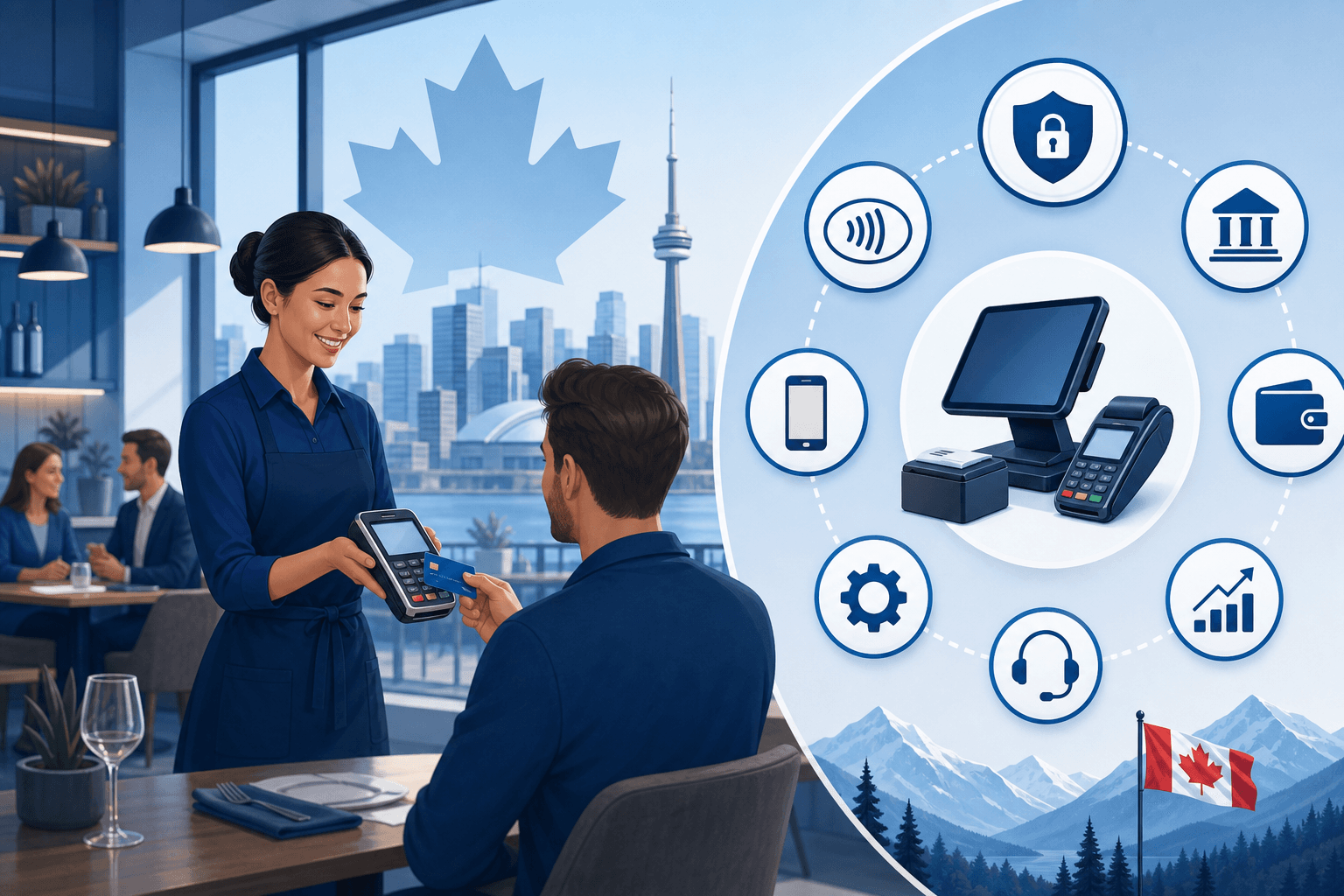
Running a restaurant in Canada is challenging enough without worrying whether you're overpaying to accept a customer's credit card. Yet payment processing is one of the most overlooked line items on a restaurant's monthly statement. Between razor-thin margins, rising food costs, and labour shortages, the fees you pay to process debit and credit transactions can quietly eat away at profitability if left unchecked.
The good news? With a bit of knowledge and the right partner, restaurant owners across Canada can meaningfully reduce processing costs, speed up table turns, and create a smoother experience for guests and staff alike. In this guide, we'll walk through practical restaurant payment processing tips Canada operators can start using right away - from choosing the right hardware to understanding your statement and staying compliant with Canadian regulations.
Whether you run a quick-service spot in Toronto, a fine-dining room in Vancouver, or a family diner in Ottawa, these strategies apply. Let's dig in.
Understand Your Processing Fees Before You Try to Fix Them
Before you can lower your payment processing costs, you need to understand exactly what you're being charged. Many restaurant owners sign up with a processor years ago and never revisit their statement - meanwhile, rates, card mixes, and fee structures have all changed.
Common Fee Types on Canadian Restaurant Statements
- Interchange fees - set by Visa/Mastercard and passed through by your processor
- Assessment fees - charged by the card networks themselves
- Markup or margin - what your processor adds on top; this is the part that's negotiable
- Monthly/PCI compliance fees - flat charges regardless of volume
- Terminal or software rental fees - often bundled into leases that outlast their usefulness
If your monthly statement reads like a foreign language, you're not alone. This is exactly why so many restaurants overpay for years without realizing it. Use our savings calculator to see how your current rates stack up, or get a free quote to compare what you should actually be paying.
Choose the Right POS and Payment Hardware for a Busy Floor
Restaurants have unique operational demands compared to retail or service businesses - fast turnover, split bills, tipping, patio service, and delivery integrations all add complexity. Your payment hardware needs to keep pace.
Countertop vs. Mobile Terminals
Full-service restaurants often benefit from pay-at-table mobile terminals, which let servers process payments right at the table. This reduces walk-outs, speeds up turnover during peak hours, and improves the tipping experience since customers can select tip percentages on the spot. Quick-service restaurants, on the other hand, usually do better with a fast countertop terminal integrated directly into the POS.
Integration with Your POS System
Whatever hardware you choose, make sure it talks directly to your point-of-sale software. Manually re-entering totals from your POS into a separate payment terminal is slow and increases the risk of keying errors - plus it opens the door to order and payment mismatches that make reconciliation a nightmare at closing time. Platforms like Clover and Lightspeed are popular among Canadian restaurants because of their food-service-specific features, but not all processors integrate with them equally well. Compare processors or check out our Clover comparison and Lightspeed comparison to see which pairing makes sense for your restaurant.
Offer the Payment Methods Canadian Diners Expect
Canadian consumers have high expectations when it comes to payment flexibility, and restaurants that fall behind risk frustrating guests or losing sales altogether.
Tap and Contactless Are Non-Negotiable
Tap payments have become the default in Canada - for both credit and Interac debit. If your terminal is slow to process taps or has a low contactless limit, you're creating friction at exactly the moment guests are ready to pay and leave.
Mobile Wallets and QR Code Ordering
Apple Pay, Google Pay, and Interac e-Transfer are now everyday expectations, especially among younger diners. Many Canadian restaurants have also added QR-code ordering and payment at the table, letting guests pay their own bill from their phone without waiting for a server. This is particularly valuable during busy dinner rushes.
Don't Forget Interac Debit
Debit remains extremely popular in Canada, and Interac debit transactions typically carry lower processing costs than credit cards. Make sure your terminal setup makes debit just as easy to select as credit, and consider training staff to mention it as an option - it can save both you and your customer money.
Watch Out for Hidden Costs in Multi-Location and Franchise Setups
If you operate more than one location, or you're part of a franchise system, payment processing gets more complicated - and more expensive if you're not careful.
Standardize Your Processor Across Locations
Using different processors or rate plans at each location makes it nearly impossible to compare performance or negotiate better rates. Consolidating under a single processor with transparent, consistent pricing gives you leverage and much clearer reporting.
Watch for Equipment Lease Traps
Many restaurant groups get locked into multi-year equipment leases that cost far more than the hardware is worth - sometimes continuing to bill long after a location has closed. Always read the fine print, and ask potential processors whether their hardware is owned outright or leased.
Regional Considerations
Costs and expectations can vary by province. Restaurants in Quebec, for example, often deal with Desjardins as an incumbent processor - our Desjardins comparison breaks down how it stacks up. Owners in major metro areas should also look at local resources: Toronto payment processing, Vancouver payment processing, Calgary payment processing, Montreal payment processing, and Ottawa payment processing all have market-specific nuances worth understanding.
Stay Compliant with Canadian Rules and Protect Against Fraud
Payment processing isn't just about cost - compliance and security matter too, especially in an industry with high transaction volume and frequent staff turnover.
PCI Compliance
All Canadian restaurants that accept credit or debit cards must maintain PCI DSS compliance. This means keeping your POS software updated, using EMV-compliant terminals, and never storing card numbers in plain text or on handwritten receipts. Non-compliance can result in fines and increased liability if a data breach occurs.
Tip and Gratuity Reporting
The CRA has specific rules around reporting tips and gratuities as income, and controlled tips (like those processed through your POS) are treated differently from direct cash tips. Make sure your payment processor and POS provide clear reporting that helps your bookkeeper stay on top of this.
Chargeback Prevention
Restaurants see chargebacks from disputed charges, duplicate transactions, or dissatisfied customers. Clear receipts, accurate tip calculations, and prompt itemized records all help you win disputes when they arise. A good processor will also offer support and guidance when a chargeback comes in, rather than leaving you to navigate it alone.
Switching Processors Without Disrupting Service
Many restaurant owners stick with a costly or outdated processor simply because they're afraid switching will cause downtime during service - a legitimate concern when every minute of a dinner rush matters.
The reality is that switching processors doesn't have to be disruptive. A good provider will:
- Port your existing menu and POS setup rather than making you rebuild from scratch
- Schedule installation and staff training during off-peak hours
- Provide side-by-side support during the transition period
- Offer terminal hardware that mirrors what your staff already know how to use
If you've been putting off a switch because of rate creep, outdated equipment, or poor support, now is a good time to revisit your options. Contact our team to talk through a transition plan tailored to your restaurant's hours and volume, or explore our dedicated restaurant solutions built specifically for Canadian food service businesses.
Bringing It All Together
Processing fees, hardware choices, compliance requirements, and multi-location complexity all play a role in how much your restaurant actually keeps from every transaction. The restaurants that thrive tend to treat payment processing as a strategic decision rather than an afterthought - reviewing statements regularly, choosing hardware that fits their service style, and working with a processor who understands the Canadian food service industry specifically.
Small changes - like prompting debit over credit where appropriate, eliminating unnecessary lease fees, or upgrading to faster contactless terminals - add up to meaningful savings over a year. And for many operators, the biggest win comes simply from finally understanding what's on their statement in the first place.
If you're ready to stop guessing and start saving, get a free quote today and see exactly how much your restaurant could save with transparent, Canadian-built payment processing.