Introduction
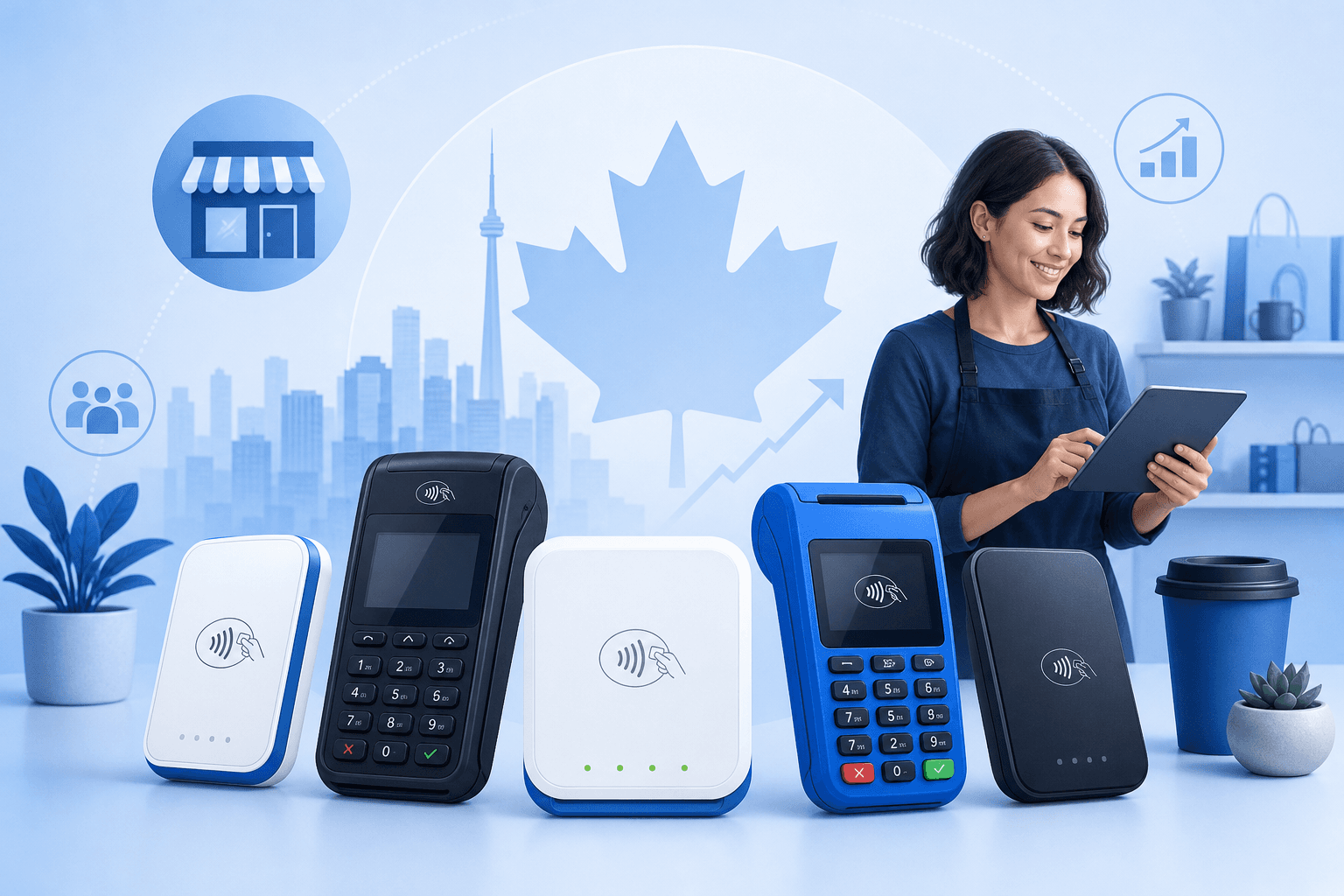
If you run a food truck in Calgary, a mobile grooming service in Toronto, or a farmers market stall in Montreal, you already know that customers rarely carry cash anymore. In 2026, a reliable mobile card reader isn't a nice-to-have - it's essential infrastructure for getting paid. Canadian consumers overwhelmingly expect tap-to-pay, and businesses that can't accept contactless payments are quietly losing sales every single day.
The challenge is that the mobile card reader market has exploded with options, each with different pricing structures, hardware costs, and hidden fees. Choosing the wrong one can cost your business thousands of dollars a year in unnecessary processing fees, or leave you stuck with clunky hardware that frustrates customers during peak hours.
This guide breaks down the best mobile card readers for Canadian small businesses in 2026, what to look for, and how to avoid the common pricing traps that catch so many entrepreneurs off guard. Whether you're a solo contractor, a retail pop-up, or a growing restaurant chain, we'll help you find the right fit for your business - and your bottom line.
Why Mobile Card Readers Matter More Than Ever in Canada
Canada has one of the highest contactless payment adoption rates in the world. Debit and credit tap payments now account for the vast majority of in-person transactions, and that number keeps climbing year over year. For small and medium businesses, this shift means:
- Lost sales without card acceptance. Many Canadians simply don't carry cash anymore, especially younger consumers.
- Faster checkout times. Mobile readers speed up lines at markets, events, and pop-up shops.
- Professional credibility. Accepting tap, chip, and mobile wallet payments (Apple Pay, Google Pay, Interac) signals legitimacy to customers.
- Flexibility for mobile businesses. Contractors, delivery services, home services, and event vendors need hardware that works anywhere - not just behind a fixed counter.
The right reader also needs to comply with Canadian payment standards, including EMV chip requirements and Interac debit processing, which not all US-based providers handle equally well.
What to Look for in a Mobile Card Reader
Before comparing specific devices, it's worth understanding the factors that actually matter for your business.
Transaction Fees and Pricing Structure
This is the single biggest factor affecting your long-term costs. Mobile card readers typically fall into two pricing camps:
- Flat-rate pricing - a fixed percentage per transaction (common with app-based processors)
- Interchange-plus pricing - a smaller markup on top of the actual card network interchange rate, often cheaper at scale
Flat-rate providers are easy to understand but can cost significantly more as your volume grows. If you're processing more than a few thousand dollars a month, interchange-plus pricing usually saves money. Use our savings calculator to see exactly how much a particular rate structure would cost your business over a year.
Hardware Cost and Durability
Mobile readers range from free (with contract commitments) to $400+ for ruggedized, all-in-one terminals. Consider:
- Battery life for all-day events or shifts
- Durability if used outdoors or in a vehicle
- Screen size for tip prompts and signature capture
- Bluetooth/Wi-Fi reliability in areas with poor connectivity
Integration With Your Existing Systems
If you already use a POS system, accounting software, or inventory management tool, your card reader needs to integrate smoothly. This is especially important for retail and restaurant businesses tracking inventory in real time, and for businesses running ERP systems like Odoo that need clean payment data flowing automatically.
Canadian Compliance and Support
Make sure any provider you choose offers:
- Canadian dollar (CAD) settlement with no unnecessary currency conversion fees
- PCI DSS compliance
- Local Canadian customer support (not just US-based call centres)
- Interac debit acceptance, which some US-first processors handle poorly
Comparing the Top Mobile Card Reader Options for 2026
App-Based Flat-Rate Readers
These are the plug-and-play readers that connect to a smartphone app, popular with solopreneurs and very small businesses. They're easy to set up but often carry higher per-transaction fees - frequently in the 2.65%-2.9% range plus a per-transaction fee. If you're comparing providers like Stripe's mobile hardware, it's worth looking closely at how flat-rate pricing compares to interchange-plus options as your volume grows. See our full Stripe comparison for a detailed breakdown.
Best for: Very low-volume businesses, pop-up vendors, occasional sellers
POS-Integrated Mobile Terminals
These readers are part of a broader point-of-sale ecosystem - think Clover's mobile units or Lightspeed's handheld terminals. They offer deeper inventory, staff management, and reporting features, which makes them ideal for restaurants, retail stores, and salons that need more than just a payment tool.
- Clover's mobile lineup integrates tightly with its full POS suite - see our Clover comparison for pricing details
- Lightspeed's mobile hardware works well for retail and hospitality businesses already using its platform - check our Lightspeed comparison
Best for: Restaurants, retail stores, salons, and businesses that need inventory and staff tracking alongside payments
Bank-Bundled Mobile Readers
Many Canadian businesses default to whatever mobile reader their bank offers, such as TD or Desjardins. These can be convenient if you already bank with that institution, but they're often not the most cost-competitive option, and support can be limited outside business hours.
- See our TD comparison if you're currently using TD's merchant services
- Quebec businesses should check our Desjardins comparison for region-specific pricing
Best for: Businesses prioritizing simplicity over cost savings
Enterprise and High-Volume Mobile Solutions
Larger operations - multi-location retailers, growing restaurant groups, or businesses processing high transaction volumes - often outgrow basic mobile readers. Enterprise-grade processors like Chase Paymentech offer more robust infrastructure, though often at a higher complexity cost. Our Chase comparison breaks down when this makes sense.
Best for: Multi-location businesses and high-volume processors
Choosing the Right Reader by Industry
Different industries have very different needs when it comes to mobile payments:
- Restaurants and food trucks need fast, durable readers with tip prompts and the ability to handle line-bursts during rush hours. See our restaurant solutions for tailored recommendations.
- Retail and pop-up shops benefit from inventory-integrated readers that sync sales data in real time. Explore our retail solutions.
- Salons and spas often need appointment-linked payment processing alongside mobile flexibility for at-home services. Check out our salon & spa solutions.
- Construction and field service businesses need rugged readers that work offline and sync once reconnected. Our construction solutions page covers this in detail.
- Healthcare providers offering mobile or in-home services need secure, compliant payment options. Visit our healthcare solutions page.
- Hospitality businesses, including hotels and event venues, often need mobile readers that integrate with broader booking systems. See our hospitality solutions.
- Nonprofits collecting donations at events benefit from low-fee mobile readers designed for fundraising. Our nonprofit solutions page has more detail.
- E-commerce businesses expanding into pop-ups or markets need readers that sync with their online store. Check our e-commerce solutions.
- Automotive service businesses doing mobile repairs or detailing need durable, on-the-go readers. See our automotive solutions.
Regional Considerations Across Canada
Payment processing needs can vary slightly depending on where you operate. Businesses in major Canadian markets often have access to more localized support and faster installation:
- Toronto payment processing for GTA-based businesses
- Vancouver payment processing for BC merchants
- Calgary payment processing for Alberta businesses
- Montreal payment processing for Quebec-based operations
- Ottawa payment processing for the capital region
Wherever you're located, local support can make a real difference when you need fast hardware replacement or troubleshooting during busy seasons.
How to Avoid Overpaying for Mobile Processing
The biggest mistake Canadian small businesses make isn't choosing the "wrong" reader - it's not understanding the full fee structure behind it. Watch out for:
- Monthly minimums that charge you even in slow months
- PCI compliance fees buried in the fine print
- Batch or statement fees that add up over a year
- Currency conversion charges if settlement isn't in CAD
- Early termination fees if you're locked into a multi-year contract
Before committing to any provider, it's worth running your actual transaction volume through a cost comparison. Use our savings calculator to estimate your true annual processing costs, and compare processors side by side to see how different providers stack up for your specific business type.
Conclusion
Choosing among the best mobile card readers for Canadian small businesses in 2026 ultimately comes down to understanding your transaction volume, your industry's specific needs, and the true cost structure behind each provider - not just the sticker price of the hardware. A $0 reader with high per-transaction fees can easily cost more over a year than a $300 device with lower rates, especially as your business grows.
The good news is you don't have to figure this out alone. Our team works with Canadian businesses every day to match them with the right mobile payment solution, free from the confusing fine print that makes comparison shopping so frustrating. Get a free quote to see transparent, Canadian-specific pricing for your business, or contact our team to talk through your options with a real person who understands the Canadian payments landscape.