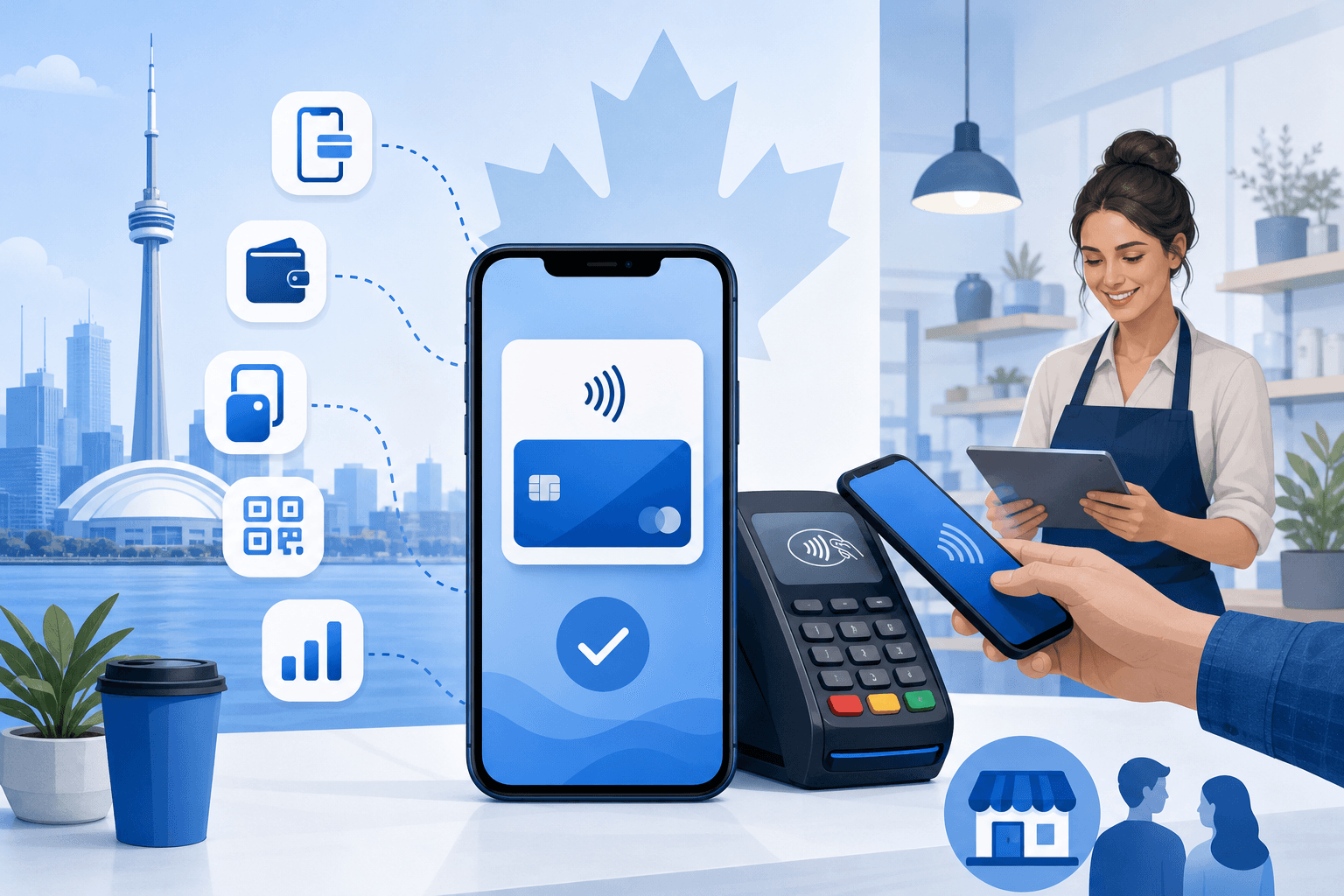
If you're running a small business in Canada, chances are your customers want to pay the way they live - with a tap of their phone, a scan of a QR code, or a quick swipe on a mobile card reader. The days of needing a clunky countertop terminal just to accept a Visa or Mastercard are long gone. In 2026, mobile payment processing has become the backbone of how Canadian entrepreneurs run farmers market stalls, food trucks, salons, contracting businesses, and even full-service restaurants.
But with so many apps and providers competing for your business - each promising "the lowest rates" and "zero hidden fees" - choosing the right one can feel overwhelming. Some apps are built for solopreneurs who need to accept the occasional payment. Others are designed for multi-location retailers that need inventory syncing, staff permissions, and real-time reporting. Picking the wrong one can mean overpaying on transaction fees or being locked into a contract that doesn't fit how you actually do business.
This guide breaks down the best mobile payment processing apps for Canadian small businesses in 2026, what makes each one worth considering, and how to evaluate which solution will actually save you money and headaches. Whether you're based in Toronto, Vancouver, Calgary, Montreal, or a small town in between, this comparison will help you make a confident, informed decision.
Why Mobile Payment Processing Matters More Than Ever in Canada
Canadian consumers have fully embraced contactless and mobile payments. Tap-to-pay now accounts for the vast majority of in-person debit and credit transactions in Canada, and more shoppers expect to pay with Apple Pay, Google Pay, or even direct bank transfers through Interac. If your business can't keep up, you risk losing sales - especially to younger, mobile-first customers.
Mobile payment processing apps solve a few critical problems for small business owners:
- Lower upfront costs compared to traditional POS hardware and long-term leases
- Flexibility to accept payments anywhere - at a market stall, job site, or pop-up shop
- Faster setup since most apps can be downloaded and activated within a day
- Better cash flow visibility through built-in reporting and next-day deposits
That said, convenience shouldn't come at the cost of excessive fees. Many mobile apps charge flat-rate pricing that looks simple on the surface but can cost significantly more than interchange-plus pricing as your sales volume grows. This is where it pays to compare processors before committing.
What to Look for in a Mobile Payment Processing App
Before diving into specific apps, it helps to know what actually separates a great mobile payment solution from a mediocre one.
Transaction Fees and Pricing Structure
Most mobile processors in Canada charge somewhere between 2.6% and 2.9% + $0.10-$0.30 per tap or swipe transaction. Flat-rate pricing is easy to understand but can be expensive for higher-volume businesses. Interchange-plus pricing, while slightly more complex, often ends up cheaper once you're processing more than a few thousand dollars a month. If you're unsure which structure benefits you, use our savings calculator to see the real numbers side by side.
Settlement Speed
Cash flow matters, especially for small businesses. Some apps deposit funds the next business day; others take two to three days. If you're paying suppliers or staff quickly, settlement speed can make a real difference.
Hardware Compatibility
Does the app work with a simple card reader, or does it require proprietary (and often pricier) hardware? Look for apps that support Bluetooth or USB-C readers compatible with your existing phone or tablet.
Canadian Compliance and Support
Make sure the provider is PCI-DSS compliant, supports Interac Debit (a must for Canadian customers), and settles deposits in CAD. Canadian-based customer support - not an overseas call centre with limited hours - is also a major plus when something goes wrong on a busy Saturday.
Integration With Your Existing Tools
If you're using accounting software, inventory systems, or an e-commerce storefront, your mobile payment app should integrate smoothly rather than creating double data entry.
Top Mobile Payment Processing Apps for Canadian Small Businesses in 2026
Here's a closer look at the leading options Canadian business owners are using this year.
Clover Go
Clover's mobile app pairs with a compact card reader and syncs directly with Clover's broader POS ecosystem, making it a strong choice for businesses that may want to scale into a full countertop or kitchen-display setup later. It supports tap, chip, and swipe payments, plus Interac Debit. Clover is particularly popular with restaurants and retailers that want room to grow. If you're also considering a full POS setup, check out our detailed Clover comparison to see how it stacks up against alternatives.
Stripe Terminal / Stripe Reader
Stripe has built a strong reputation among e-commerce businesses, and its mobile terminal extends that same developer-friendly ecosystem into in-person payments. It's a great fit for businesses that sell both online and in person and want unified reporting across channels. Pricing is flat-rate, which is simple but can add up for high-volume merchants - see our Stripe comparison for a deeper breakdown.
Square
Square remains a favourite for very small businesses and side hustles thanks to its free app, simple flat-rate pricing, and no monthly fees. It's easy to set up in an afternoon, which makes it popular with new entrepreneurs testing the waters. However, as transaction volume grows, Square's flat rates can become less competitive than interchange-plus alternatives.
Moneris Go
As one of Canada's homegrown payment processors, Moneris offers strong Canadian support and deep integration with Canadian banks. Moneris Go is a solid option for business owners who want a processor with decades of experience in the Canadian market and familiarity with Canadian regulatory requirements.
Lightspeed Payments
For retail and restaurant businesses already using Lightspeed's POS software, Lightspeed Payments offers a tightly integrated mobile processing option. It's especially useful for multi-location businesses needing centralized reporting. Read our Lightspeed comparison if you're deciding between a dedicated POS platform and a simpler standalone app.
Bank-Bundled Options (TD, Desjardins)
Some Canadian business owners default to whatever mobile processing option their bank offers, such as TD or Desjardins. These can be convenient if you already bank with them, but bundled processing isn't always the most cost-effective choice. It's worth comparing rates independently - our TD comparison and Desjardins comparison break down where these bank-bundled solutions shine and where they fall short, particularly for Quebec-based businesses weighing Desjardins against independent processors.
Choosing the Right App for Your Industry
Not every mobile payment app is built the same way, and the "best" choice often depends heavily on your industry.
- Restaurants and cafés benefit from apps that support tipping prompts, split bills, and quick table-side payment. See our restaurant solutions for tailored recommendations.
- Retail shops need inventory syncing and barcode scanning support - our retail solutions page covers what to prioritize.
- Salons and spas often need appointment-linked payments and deposit collection, covered in our salon & spa solutions.
- Contractors and construction businesses need rugged, offline-capable readers for job sites - check out construction solutions.
- Healthcare practices handling private billing should prioritize PCI compliance and patient data security, detailed in our healthcare solutions.
- E-commerce sellers expanding into pop-ups or markets need apps that unify online and in-person sales, as outlined in our e-commerce solutions.
- Hotels and hospitality businesses need mobile processing that supports pre-authorizations and deposits - see hospitality solutions.
- Nonprofits collecting donations on the go should look at low-fee or discounted processing options available through nonprofit solutions.
- Auto shops and mobile mechanics need durable readers for job-site payments - our automotive solutions page has specifics.
Regional Considerations Across Canada
Payment processing needs can vary slightly depending on where your business operates. Businesses in major metro areas often have access to more competitive local support and faster technician response times. If you're based in a big city, it's worth checking resources specific to your region:
- Toronto payment processing for GTA businesses navigating a competitive retail and hospitality market
- Vancouver payment processing for BC-based businesses, including many tourism-driven seasonal operations
- Calgary payment processing for Alberta's growing small business and energy-sector service economy
- Montreal payment processing for Quebec businesses, where bilingual support and Desjardins integration are often priorities
- Ottawa payment processing for businesses serving government, tech, and tourism sectors
No matter where you're located, the fundamentals remain the same: compare fees carefully, confirm CAD settlement, and make sure support is actually responsive when you need it.
How to Actually Compare Your Options
Rather than guessing which app offers the best deal, take these concrete steps:
- Pull your last three months of processing statements (if you're already accepting payments) to understand your actual transaction volume and average ticket size.
- Run the numbers through a calculator to compare flat-rate versus interchange-plus pricing realistically - use our savings calculator to see which structure wins for your business.
- Ask about contract terms. Some providers lock you into multi-year agreements with early termination fees, while others offer month-to-month flexibility.
- Test customer support responsiveness before fully committing - send a question and see how long it takes to get a real answer.
- Request a tailored quote rather than relying on advertised rates, which often apply only to the lowest-risk, lowest-volume merchants.
Taking these steps seriously can save Canadian small businesses hundreds or even thousands of dollars per year in unnecessary fees.
Final Thoughts
There's no single "best" mobile payment processing app for every Canadian small business - the right choice depends on your industry, transaction volume, growth plans, and how much you value integrated hardware versus flexibility. What matters most is that you choose a provider that's transparent about fees, compliant with Canadian regulations, and genuinely responsive when issues come up.
If you're still weighing your options, our team can walk you through the pros and cons based on your specific business model, transaction volume, and growth goals. Contact our team to talk through what's realistic for your business, or explore our services to see how we help Canadian merchants cut unnecessary processing costs. And if you're ready to see exactly how much you could save by switching, get a free quote today - it only takes a few minutes.