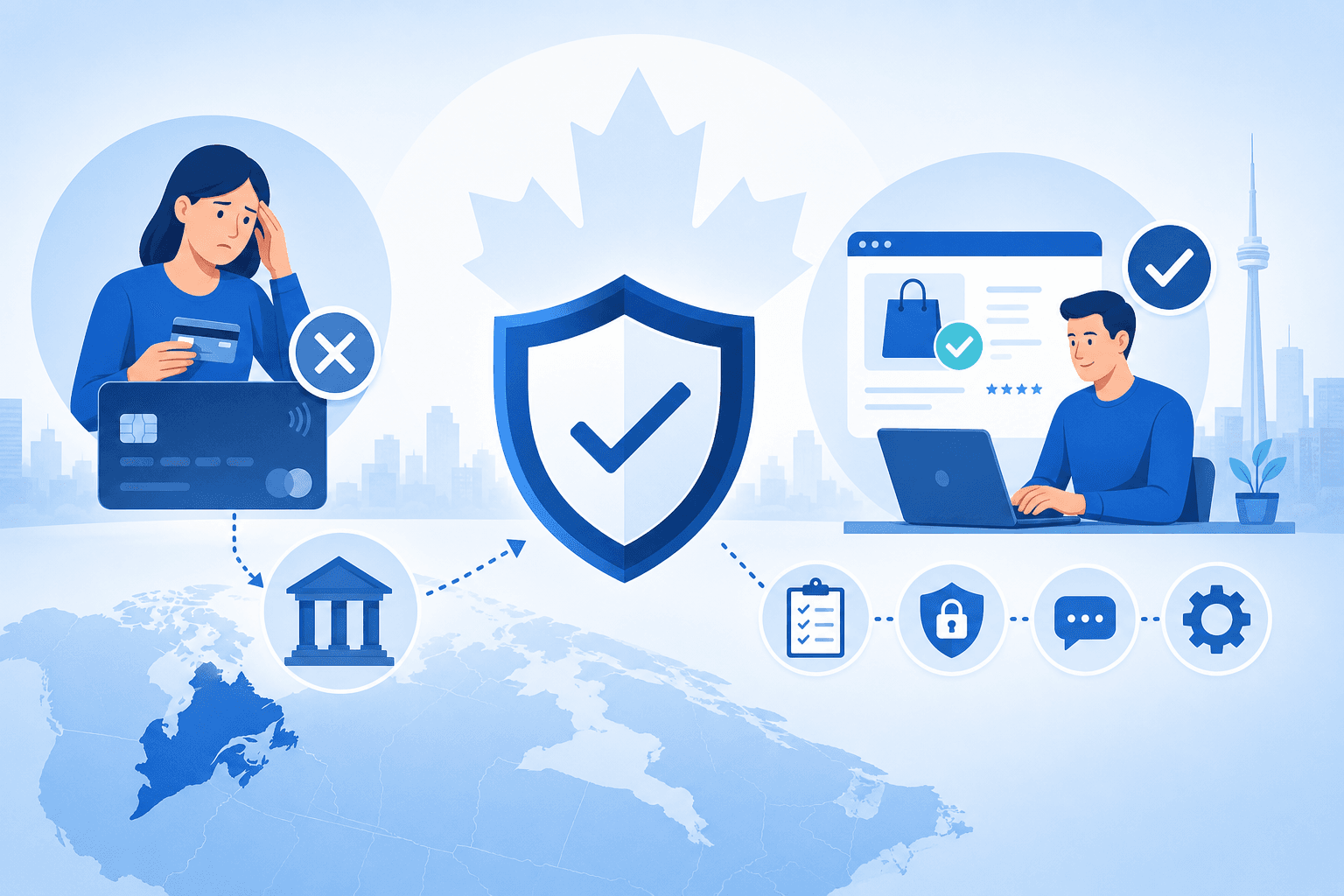
What Every Canadian Business Owner Needs to Know About Chargebacks
You've made the sale, delivered the product or service, and the money is sitting in your account - then weeks later, it's gone. A chargeback has reversed the transaction, and now you're out both the revenue and the merchandise. For Canadian small and medium business owners, chargebacks are one of the most frustrating and costly challenges in accepting card payments.
In 2023 alone, chargeback fraud (also called "friendly fraud") cost merchants globally over $100 billion CAD in losses when accounting for the transaction value, fees, and operational costs of disputes. Canadian businesses are far from immune. Whether you run a boutique in Vancouver, a restaurant in Toronto, or an online store serving customers coast to coast, understanding chargebacks is essential to protecting your revenue.
This guide gives you chargebacks explained: how to prevent them - covering what they are, why they happen, what they cost, and most importantly, what you can do right now to stop them before they start.
What Is a Chargeback and How Does It Work?
A chargeback is a forced transaction reversal initiated by a cardholder's bank (the issuing bank), not by the merchant. It's different from a refund, where you as the business owner voluntarily return the customer's money. With a chargeback, the bank steps in and pulls the funds back - often without your immediate knowledge.
The Chargeback Process Step by Step
- The cardholder disputes a charge with their bank, citing reasons like fraud, non-delivery, or dissatisfaction.
- The issuing bank investigates and provisionally credits the cardholder's account.
- Your acquiring bank is notified and the disputed funds are debited from your merchant account.
- You receive a chargeback notice with a reason code and a deadline to respond (typically 20-45 days).
- You can fight the chargeback by submitting compelling evidence - this is called representment.
- The card network (Visa, Mastercard) makes a final ruling based on the evidence submitted by both sides.
If you don't respond in time, or your evidence isn't strong enough, the chargeback stands and you lose the funds permanently - plus you're charged a chargeback fee, which in Canada typically ranges from $15 to $100 CAD per dispute depending on your processor.
Common Reasons Chargebacks Happen
Understanding why chargebacks occur is the first step toward preventing them. Chargebacks generally fall into three categories:
1. True Fraud
A stolen card or compromised account is used to make a purchase without the cardholder's knowledge. This is genuine fraud, and it's one of the reasons contactless and chip payments exist.
2. Friendly Fraud
The cardholder made the purchase themselves but disputes it anyway - sometimes intentionally to get something for free, and sometimes out of confusion (e.g., they didn't recognize the business name on their statement). Friendly fraud accounts for the majority of chargeback disputes Canadian merchants face.
3. Merchant Error
Chargebacks can also result from legitimate mistakes on your end: processing a payment twice, charging the wrong amount, failing to issue a promised refund, or not delivering on a service as described.
What Chargebacks Really Cost Your Business
The sticker price of a chargeback is bad enough - you lose the transaction amount plus the dispute fee. But the true cost goes deeper:
- Chargeback fees: $15-$100 CAD per dispute
- Lost merchandise or service: You've already delivered the goods
- Staff time: Gathering evidence and filing representments takes hours
- Elevated processing rates: Too many chargebacks can trigger rate increases
- Account termination risk: Visa and Mastercard set chargeback thresholds (typically 1% of monthly transactions). Exceeding them puts your merchant account at risk
If you're unsure how chargeback exposure is affecting your overall processing costs, use our savings calculator to see where your money is going and where you could save.
Chargebacks Explained: How to Prevent Them - 8 Proven Strategies
Now for the part that matters most: keeping chargebacks from happening in the first place. These strategies are practical, implementable for Canadian businesses of all sizes, and proven to reduce dispute rates.
1. Use a Clear, Recognizable Billing Descriptor
One of the most common causes of friendly fraud is a customer not recognizing a charge on their statement. Make sure your merchant descriptor - the name that appears on bank statements - clearly matches your business name. If your legal business name differs from your trading name, use the trading name your customers know.
2. Require Strong Authentication at the Point of Sale
In Canada, chip-and-PIN and tap payments under the Interac and Visa/Mastercard networks provide liability shift protections. When a cardholder uses a chip or contactless payment, and the transaction is authenticated properly, liability for fraud shifts away from you to the card issuer. Always use EMV-compliant terminals and avoid manually keying in card numbers unless absolutely necessary.
3. Get Explicit Authorization for Recurring Billing
If your business charges customers on a subscription or recurring basis, always obtain written authorization - and make the terms crystal clear. In Canada, Visa and Mastercard both require specific disclosure language for recurring transactions. Store that authorization securely so you can produce it if a dispute arises.
4. Communicate Clearly and Proactively
Many chargebacks can be stopped with a simple phone call or email. Send order confirmations, shipping notifications, and delivery confirmations. Make your return and refund policies easy to find. When customers know what to expect - and have a way to reach you - they're far less likely to go straight to their bank.
5. Respond Quickly to Customer Complaints
Make it easy for dissatisfied customers to reach you before they dispute a charge. A clear, accessible customer service channel - even just a phone number and email on your receipt - can convert a would-be chargeback into a managed refund. A refund costs you the transaction amount; a chargeback costs you that plus fees, time, and potential account risk.
6. Use Fraud Detection Tools for Online Sales
For e-commerce businesses, online transactions carry significantly higher chargeback risk since cards aren't physically present. Implement tools like:
- Address Verification Service (AVS): Checks billing address against card records
- CVV/CVC verification: Requires the 3-digit security code
- 3D Secure (Verified by Visa / Mastercard Identity Check): Adds an authentication step at checkout
- Velocity checks: Flag unusual purchase patterns (multiple orders in short windows)
These layers of protection significantly reduce fraudulent transactions and strengthen your position if a dispute does occur. If you're building or optimizing an online store, explore our e-commerce solutions designed with Canadian merchants in mind.
7. Document Everything
In any chargeback dispute you fight, documentation is your best weapon. Keep records of:
- Signed receipts or authorization forms
- Order confirmations and email correspondence
- Proof of delivery (tracking numbers, signatures)
- IP addresses and device fingerprints for online orders
- Refund or return records
The more evidence you have, the stronger your representment case if a chargeback does come through.
8. Choose the Right Payment Processor
Not all processors are created equal when it comes to chargeback support. Some provide robust dispute management tools, proactive alerts, and dedicated support teams. Others leave you to navigate the process alone. If your current processor isn't giving you the tools and support you need to manage chargebacks effectively, it may be time to compare processors and find one that's a better fit for your business.
Fighting Back: When and How to Dispute a Chargeback
Sometimes, even with the best prevention strategies, chargebacks happen. When you believe a dispute is illegitimate, you have the right to fight it through a process called representment.
Here's what to do:
- Review the reason code carefully - it determines what evidence you need to submit
- Gather your documentation (receipts, delivery proof, correspondence)
- Write a clear rebuttal letter explaining why the chargeback is invalid
- Submit everything before the deadline - missing it means automatic loss
- Track your win rate to identify patterns and improve prevention
If you're winning fewer than 40% of your representments, that's a sign your documentation practices or processor support needs improvement. Contact our team to learn how PaymentsPlus helps Canadian merchants manage disputes more effectively.
Canadian Regulations and Chargeback Rules You Should Know
In Canada, chargeback rules are governed by the card networks (Visa and Mastercard) in conjunction with the Payment Card Networks Act and oversight from the Financial Consumer Agency of Canada (FCAC). Key points for Canadian merchants:
- Code of Conduct for the Credit and Debit Card Industry in Canada sets baseline requirements for how disputes must be handled
- Merchants have the right to receive clear disclosure of chargeback fees and processes from their processor
- Time limits for responding to chargebacks vary by reason code but are strictly enforced - typically between 20 and 45 calendar days
- If you process in both CAD and USD, be aware that exchange rate fluctuations can affect the net loss on international chargebacks
Staying informed about your rights under Canadian payment regulations puts you in a stronger position to manage and dispute chargebacks.
Conclusion: Protect Your Revenue with a Proactive Approach
Chargebacks are an unavoidable reality of accepting card payments - but they don't have to be a constant drain on your business. With chargebacks explained and how to prevent them now firmly in your toolkit, you're equipped to take a proactive approach: tightening your authentication processes, communicating clearly with customers, documenting transactions thoroughly, and choosing a processor that has your back.
For Canadian small and medium businesses, the difference between a 0.3% chargeback rate and a 1.2% rate can mean thousands of dollars annually - money that should stay in your pocket. Whether you're just starting to think about chargeback prevention or you're dealing with a spike in disputes right now, PaymentsPlus is here to help.
Get a free quote today and find out how the right payment processing setup can reduce your chargeback exposure and lower your overall costs.