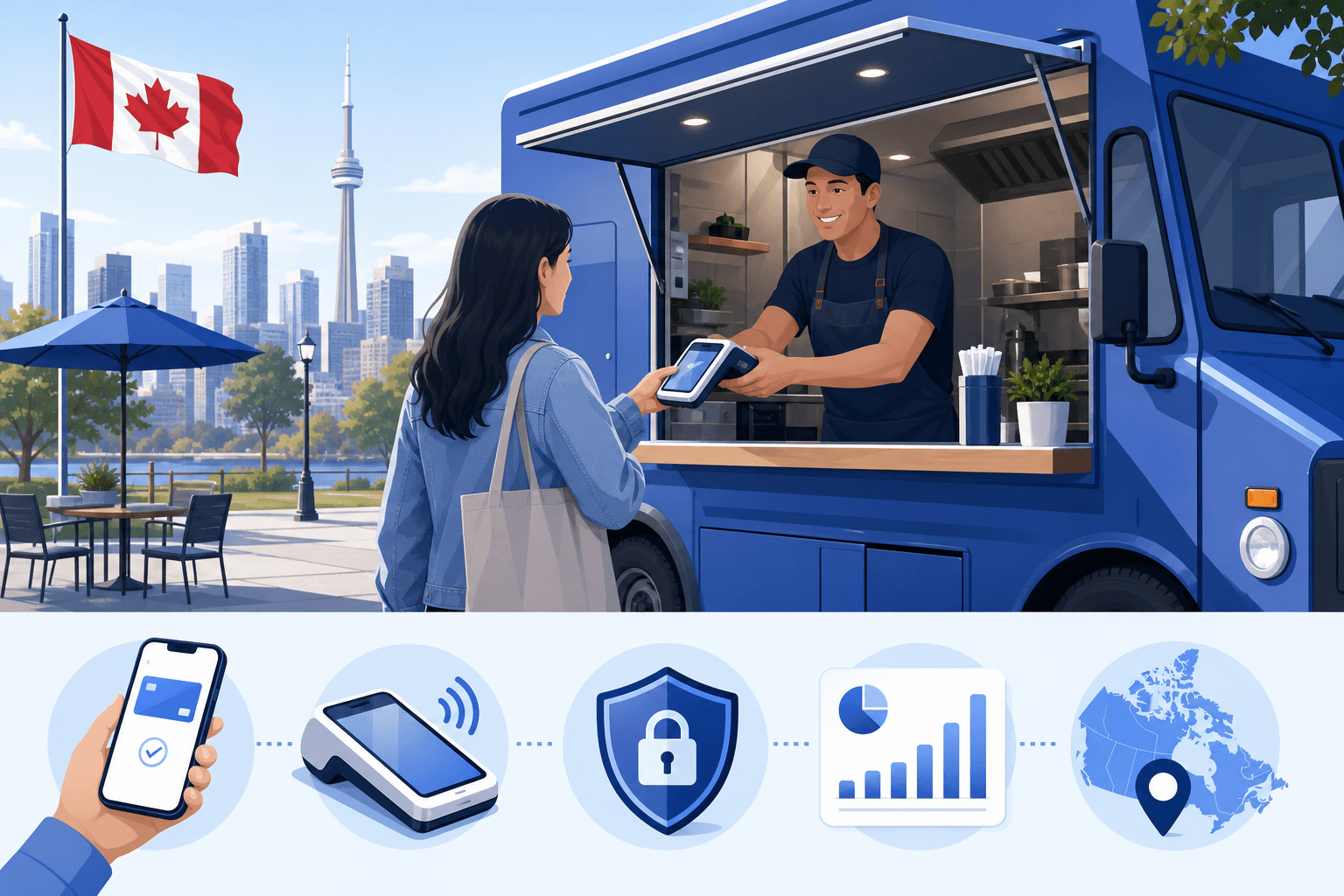
Why Food Truck Payment Processing Needs a Mobile-First Approach
Canadian food trucks live and die by speed. A lunchtime rush outside a Calgary office tower or a festival crowd in Toronto won't wait around while you fumble with a clunky terminal or apologize for being "cash only." Today's customers expect to tap their card or phone and go, no matter where they're standing. That's why food truck payment processing Canada mobile solutions have become essential rather than optional for operators across the country.
Unlike a traditional restaurant with a fixed countertop terminal and reliable Wi-Fi, food trucks operate in constantly changing environments - different parking spots, spotty cellular coverage, outdoor markets, and long lines during peak hours. Choosing the right mobile payment setup can mean the difference between capturing every sale and watching customers walk away because your card reader won't connect.
In this guide, we'll break down what Canadian food truck owners need to know about mobile payment processing: the hardware options, connectivity considerations, fees, compliance requirements, and how to choose a provider that actually understands the realities of running a business on wheels.
What Makes Food Truck Payments Different
Food trucks face a unique set of operational challenges that most payment providers design around, but not all of them design for. Understanding these differences helps you evaluate providers more effectively.
Connectivity Is Never Guaranteed
Whether you're parked in a downtown core with strong LTE or way out at a rural fair with one bar of signal, your payment system needs to handle inconsistent connectivity gracefully. Look for terminals with:
- Built-in 4G/LTE with a backup SIM option
- Offline mode that stores transactions and syncs once reconnected
- Long battery life (a full service day, minimum 8-10 hours)
Speed Matters More Than Almost Anywhere Else
A slow terminal in a sit-down restaurant is an inconvenience. A slow terminal in a food truck line during a busy festival costs you sales - customers simply leave if the line isn't moving. Fast tap-to-pay and contactless capability aren't nice-to-haves; they're core to your revenue.
You're Outdoors, and Canadian Weather Isn't Always Kind
From summer heat to winter markets, your hardware needs to handle temperature swings, moisture, and general wear and tear that indoor businesses never think about.
Choosing the Right Mobile POS Hardware
Smartphone and Tablet-Based Readers
Compact card readers that pair with your phone or tablet via Bluetooth are popular with smaller trucks because they're affordable and easy to set up. They're a great entry point if you're just launching, but check battery life and durability before committing.
All-in-One Mobile POS Terminals
Devices like Clover's mobile terminals combine a card reader, receipt printer, and order management system into one rugged unit built for standalone use. These tend to be more reliable for high-volume trucks that need built-in inventory tracking and end-of-day reporting. If you're comparing options, our Clover comparison page breaks down how it stacks up against other mobile-friendly POS systems.
Choosing Based on Volume
- Low volume / seasonal trucks: A phone-based reader may be sufficient
- Daily operations, festivals, catering: Invest in a dedicated all-in-one terminal
- Multiple trucks or a growing fleet: Look for centralized reporting across all locations
Not sure which setup fits your business? Contact our team and we'll walk you through the options based on your service volume and locations.
Understanding Fees and Pricing for Mobile Processing
This is where many food truck owners get caught off guard. Mobile processing fees in Canada can vary widely depending on your provider, and the difference between a well-negotiated rate and a generic flat-rate plan can add up to thousands of dollars per year.
Common Pricing Models
- Flat-rate pricing - A simple percentage per transaction, often marketed to small businesses. Easy to understand, but usually more expensive as your volume grows. Providers like Stripe are known for this model; see our Stripe comparison for details.
- Interchange-plus pricing - You pay the actual interchange rate set by card networks plus a small, transparent markup. This typically saves money for busy trucks doing consistent volume.
- Bank-bundled processing - Some Canadian banks bundle payment processing with business banking, similar to what you'd see with TD. Convenient, but rarely the most competitive rate.
What to Watch For
- Monthly minimums that penalize slow seasons
- Hidden PCI compliance fees
- Early termination penalties if you switch providers
- Extra charges for mobile-specific hardware or data plans
Since food trucks often have seasonal fluctuations, it's worth running the numbers before committing to a contract. Use our savings calculator to see how much you could save by switching to a more transparent pricing structure, or get a free quote to compare your current rates against a interchange-plus model built for mobile businesses.
Connectivity Solutions for On-the-Go Businesses
Cellular Data Plans Built for POS
Many Canadian processors now offer terminals with built-in SIM cards on major carrier networks. This eliminates the need to tether to your phone's hotspot, which can drain your battery and add strain during busy service.
Offline Payment Capture
Look for a system that can accept card payments even when there's no signal, storing the transaction securely and processing it automatically once you're back in coverage. This is critical for food trucks working rural markets, campgrounds, or events in dead zones.
Backup Power
A dead terminal battery mid-rush is a nightmare scenario. Keep a portable charger or power bank in your truck at all times, and choose hardware with a battery life rating that comfortably exceeds your longest service day.
Compliance and Canadian Regulations for Food Truck Operators
PCI DSS Compliance
Any business accepting card payments in Canada must comply with Payment Card Industry Data Security Standards (PCI DSS). Most modern mobile terminals handle encryption and tokenization automatically, but you're still responsible for:
- Never storing card numbers manually
- Keeping your POS software updated
- Using secure Wi-Fi or cellular connections, never unsecured public networks for processing
GST/HST and Sales Tracking
Your payment processor's reporting tools should make it easy to track sales by location and time period, which matters if you're moving between provinces or municipalities with different tax rates. Make sure your system clearly separates GST/HST collected so tax season doesn't become a scramble.
Currency and Cross-Border Considerations
If your food truck operates near the Canada-U.S. border or takes on cross-border catering gigs, confirm your processor settles in CAD by default and understand any currency conversion fees before accepting USD.
Choosing the Right Provider for Your Food Truck
Not every payment processor understands the mobile food service model. When evaluating providers, ask:
- Do they offer purpose-built mobile hardware, or are you adapting a fixed-terminal product?
- What happens to my transactions if I lose connectivity mid-sale?
- Are there Canadian support teams who understand food truck and festival operations?
- Can I get transparent, interchange-plus pricing instead of a generic flat rate?
- Is there a contract, and what are the terms if my business is seasonal?
Since food service businesses share a lot of overlap with restaurant payment needs, it's also worth reviewing our restaurant solutions page, which covers tipping, order integration, and high-volume transaction handling that applies to trucks as much as brick-and-mortar kitchens. If you're currently locked into a provider that isn't serving your mobile needs well, our compare processors page is a good place to see how different options measure up side by side.
Local Considerations Across Canada
Food truck scenes look different depending on where you operate:
- Trucks working the festival circuit in and around the GTA should check out insights for Toronto payment processing
- Operators in BC's busy summer market scene may find value in Vancouver payment processing resources
- Alberta trucks navigating Stampede season and year-round events can review Calgary payment processing
- Quebec-based operators should also look at Montreal payment processing and consider Desjardins comparison if currently banking there
- Trucks in the capital region can check Ottawa payment processing for market-specific tips
Bringing It All Together
Running a food truck in Canada means juggling weather, locations, permits, and long lines - the last thing you need is a payment system that can't keep up. The right food truck payment processing Canada mobile setup gives you rugged, reliable hardware, transparent pricing, and the connectivity backup to keep sales moving even when cell signal doesn't cooperate. Getting this right isn't just about convenience; it directly protects your revenue during your busiest, most profitable hours.
Before your next festival season or summer rush, take a hard look at your current setup. Are you losing sales to slow terminals or dropped connections? Are your fees eating into margins that are already tight? These are solvable problems with the right partner.
Ready to Upgrade Your Food Truck's Payment System?
PaymentsPlus works with Canadian food trucks and mobile food businesses to build payment solutions that actually hold up on the road - transparent pricing, dependable hardware, and support that understands your business isn't sitting still. Get a free quote today, or contact our team to talk through the best mobile setup for your truck.