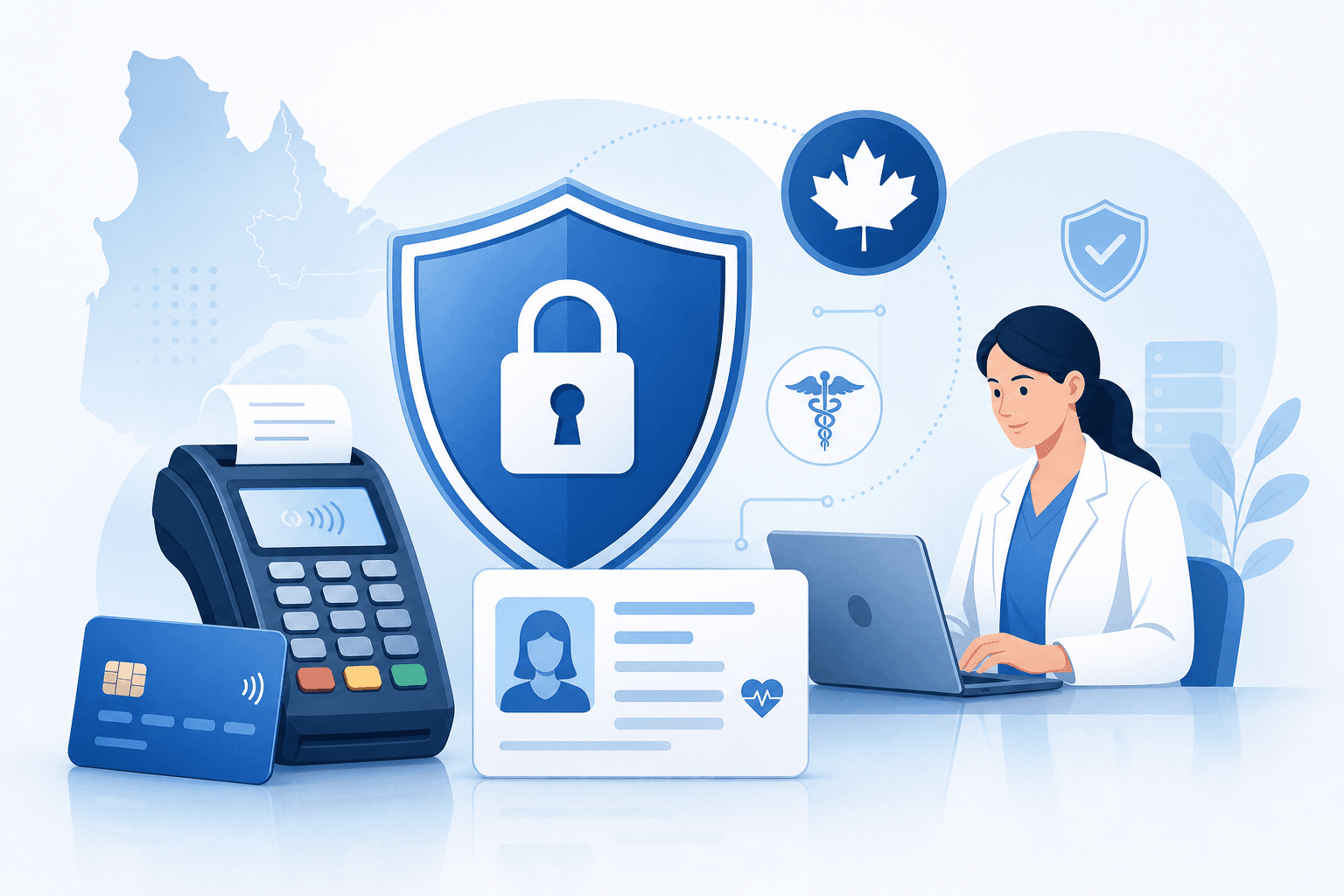
Why PHIPA Compliance Matters for Healthcare Payment Processing
If you run a clinic, dental office, physiotherapy practice, or any healthcare business in Ontario, you already know that protecting patient information isn't optional - it's the law. The Personal Health Information Protection Act (PHIPA) governs how personal health information is collected, used, and disclosed, and it extends to the payment systems you use every day. Many clinic owners focus on securing electronic medical records but overlook that their point-of-sale terminal, online booking payment page, or invoicing software can also touch protected health information.
That's where healthcare payment processing PHIPA compliant systems come in. When a patient pays for a service, the transaction data can sometimes be linked to appointment types, treatment codes, or billing descriptions that reveal sensitive health details. If your payment processor isn't handling this responsibly, you could be exposing your practice to privacy breaches, regulatory penalties, and reputational damage.
For Canadian small and medium healthcare businesses, choosing the right payment partner isn't just about transaction fees - it's about building a compliant, secure foundation for your entire practice. In this guide, we'll break down what PHIPA compliance actually means for payment processing, what to look for in a provider, and how to make the switch without disrupting patient care.
What PHIPA Compliance Actually Requires
PHIPA applies specifically to "health information custodians" in Ontario, including physicians, dentists, chiropractors, optometrists, and other regulated health professionals. While the act primarily targets clinical records, any system that stores or transmits information tied to a patient's identity and health services falls under its scope - including billing and payment data.
Key PHIPA Principles Relevant to Payments
- Limiting collection: Only collect the payment and personal information necessary to process the transaction.
- Safeguards: Use reasonable technical, physical, and administrative measures to protect personal health information, including encrypted payment data.
- Retention and disposal: Payment records containing identifiable health information must be retained securely and disposed of properly when no longer needed.
- Breach notification: If a payment system breach exposes health information, you're required to notify affected individuals and, in serious cases, the Information and Privacy Commissioner of Ontario.
- Third-party accountability: If you use a payment processor or POS vendor, you remain responsible for ensuring they handle data appropriately - this means your vendor contracts matter.
Even outside Ontario, other provinces have similar personal health information legislation (such as Alberta's HIA or Manitoba's PHIA), so the same principles apply broadly across Canada.
What to Look for in a PHIPA-Compliant Payment Processor
Not every payment processor understands healthcare-specific compliance needs. Many generic providers are built for retail or restaurants and don't offer the safeguards clinics require. Here's what to prioritize when evaluating options.
Data Encryption and Tokenization
Your processor should encrypt cardholder and transaction data end-to-end and use tokenization so that sensitive information is never stored in plain text on your systems. This reduces your PHIPA compliance burden significantly, since less raw data lives on your servers.
PCI DSS Certification
While PCI DSS (Payment Card Industry Data Security Standard) is a separate framework from PHIPA, it's a strong foundation. A PCI-compliant processor demonstrates it meets rigorous standards for protecting cardholder data, which pairs well with your PHIPA obligations for health information.
Canadian Data Residency
Ask where your transaction data is stored and processed. Many Canadian healthcare providers prefer processors that keep data within Canada to simplify compliance and avoid cross-border data transfer complications.
Clear Data Processing Agreements
Your processor should be willing to sign an agreement outlining how they handle, store, and protect any data related to your patients. This creates the accountability trail PHIPA requires when working with third parties.
Minimal Data on Receipts and Invoices
Choose systems that let you customize receipts so treatment codes or sensitive descriptions aren't printed or emailed in ways that could expose health details to unintended recipients.
If you're currently unsure whether your existing setup checks these boxes, it's worth taking a closer look. Compare processors to see how different providers stack up on security features relevant to healthcare practices.
Common Compliance Gaps in Clinic Payment Systems
Many healthcare businesses unintentionally create compliance risk through outdated or mismatched systems. Here are the most common issues we see:
- Using consumer-grade payment apps not designed for regulated industries, which often lack proper data handling agreements.
- Storing card details manually in spreadsheets or paper files for recurring billing - a major PHIPA red flag.
- Sending unencrypted payment links via email or text that could be intercepted.
- Failing to train staff on how to handle refunds, chargebacks, or payment disputes without exposing patient information.
- Ignoring reconciliation reports that contain identifiable treatment information without proper access controls.
Addressing these gaps often means upgrading your point-of-sale hardware, software, or your entire merchant account relationship. If your current bank-bundled processor isn't built with healthcare in mind, it may be time to explore alternatives - for example, many clinics still use big-bank solutions and don't realize better, more secure, and often cheaper options exist. See our TD comparison for a look at how bank-bundled processing stacks up against dedicated providers.
Choosing the Right Payment Setup for Your Practice
In-Clinic Payments
For front-desk payments, a secure terminal integrated with your practice management software reduces manual entry errors and keeps sensitive data off paper. Look for terminals that support tap, chip, and contactless payments while maintaining PCI compliance.
Online and Recurring Billing
Many physiotherapy clinics, dental offices, and wellness practices now offer online payment portals or subscription billing for ongoing treatment plans. This is convenient for patients but requires extra scrutiny - ensure recurring billing systems tokenize stored payment methods rather than keeping raw card numbers on file.
Multi-Location Practices
If you operate clinics across Canada - say, one in Toronto and another in Vancouver - consistency matters. Using the same PHIPA-aligned processor across locations simplifies compliance audits and staff training. Whether you're based in the GTA or expanding into BC, resources like our Toronto payment processing and Vancouver payment processing pages can help you understand regional considerations.
Comparing Costs Alongside Compliance
Compliance shouldn't come at the cost of affordability. Many healthcare providers are surprised to learn that switching to a compliant, purpose-built processor can actually lower their processing fees compared to legacy bank contracts. Use our savings calculator to estimate how much your clinic could save annually while upgrading your security posture.
How to Make the Switch Without Disrupting Patient Care
Transitioning payment systems can feel risky when you're juggling patient appointments and billing cycles, but a well-planned switch minimizes disruption.
- Audit your current setup: Document how payment data flows through your practice today, from booking to invoicing to storage.
- Request compliance documentation: Ask potential processors for their PCI DSS certification, data handling policies, and breach response procedures in writing.
- Plan a parallel run: Test the new system alongside your existing one for a short period before fully switching over.
- Train your front-desk staff: Make sure everyone handling payments understands both the new technology and the PHIPA principles behind it.
- Set a review schedule: Compliance isn't a one-time project - revisit your payment processes annually or whenever you add new services.
Because every clinic's workflow is different, it often helps to talk through your specific setup with a specialist rather than guessing. Contact our team to walk through your current payment stack and identify compliance gaps before they become costly problems.
Building Long-Term Trust With Patients
Beyond regulatory checkboxes, PHIPA-compliant payment processing sends a message to your patients: their privacy matters to you. In an era where data breaches make headlines regularly, Canadian patients are increasingly aware of how their personal information - including health and payment data - is handled. Practices that invest in secure, transparent systems build stronger trust and loyalty, which pays dividends beyond compliance itself.
This is particularly important for practices that serve sensitive populations, such as mental health clinics, fertility clinics, or addiction treatment centers, where the health information tied to payments can be especially sensitive. For these practices, going beyond minimum compliance and choosing best-in-class security is simply good business.
If you're ready to evaluate your options, our healthcare solutions page outlines processing tools designed specifically for Canadian medical and wellness practices, from single-provider clinics to multi-location networks.
Final Thoughts
Healthcare payment processing PHIPA compliant systems aren't just a legal safeguard - they're a foundation for running a trustworthy, modern Canadian practice. From encryption and tokenization to Canadian data residency and clear vendor agreements, the details matter more in healthcare than almost any other industry. Taking the time now to review your payment setup can save you from costly compliance headaches later, while often reducing your processing fees in the process.
Don't wait for a breach or an audit to discover gaps in your current system. Whether you're a solo practitioner in Ottawa or managing multiple clinics across Ontario and beyond, it pays to get a professional assessment of your payment processing. Get a free quote today and find out how PaymentsPlus can help your healthcare practice stay compliant, secure, and cost-efficient.