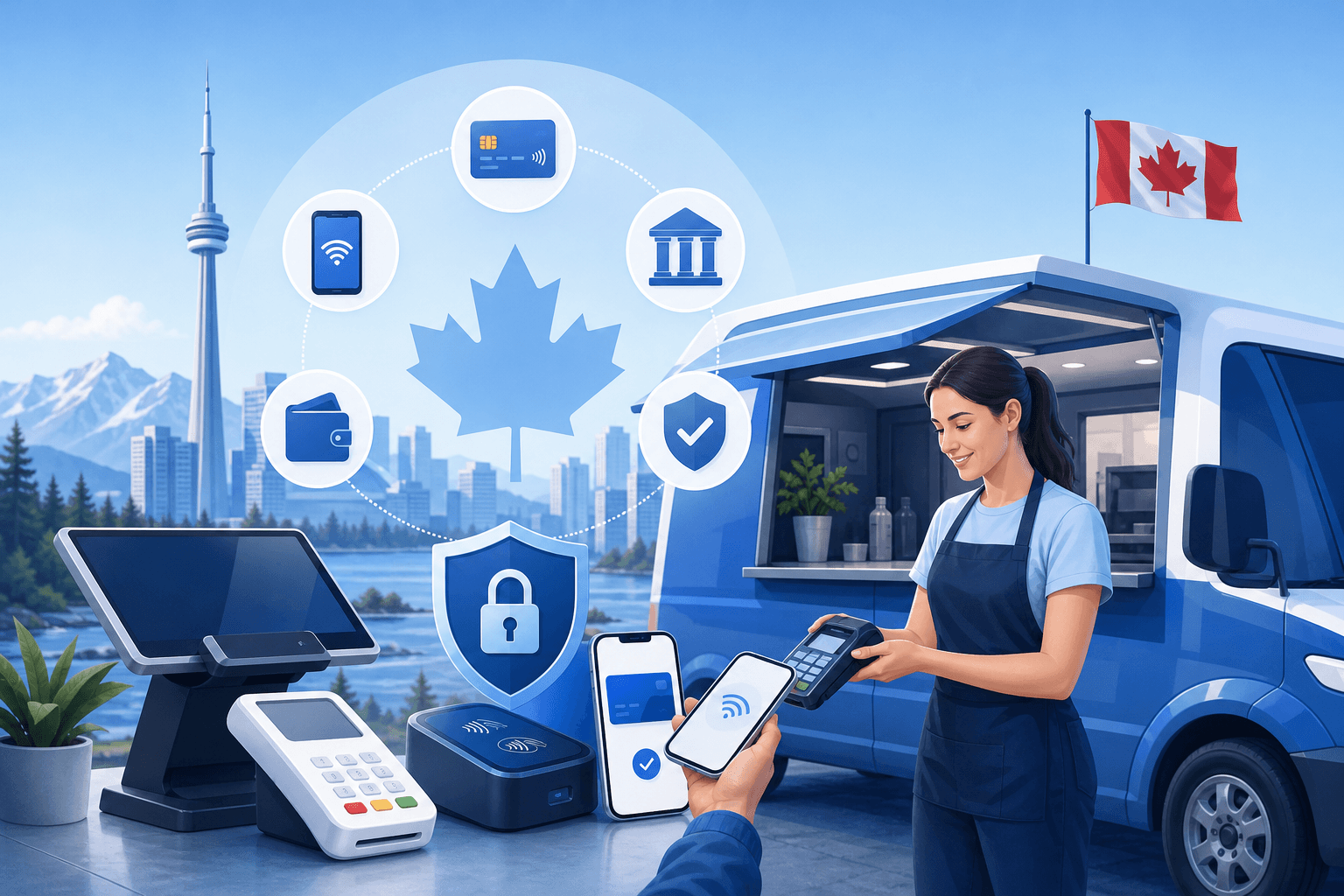
If your business operates out of a food truck, a service van, a market stall, or anywhere other than behind a fixed counter, you already know that traditional payment processing often doesn't cut it. You need to accept payments wherever your customers are, whether that's a construction site in Calgary, a farmers market in Vancouver, or a client's home in Ottawa. The good news is that Canada's payments landscape has evolved significantly, and there are now excellent options built specifically for businesses on the move.
Choosing among the best payment processing solutions for mobile businesses in Canada isn't just about picking the cheapest card reader. It involves weighing transaction fees, hardware reliability, offline functionality, contract terms, and how well a solution integrates with your existing systems. Get it wrong, and you could be stuck with dropped connections at the worst possible moment, hidden fees eating into your margins, or hardware that can't handle Canadian winters.
This guide breaks down what mobile business owners across Canada need to know to choose the right payment processor, along with practical advice for comparing your options and avoiding costly mistakes.
What Makes a Payment Processor "Mobile-Ready"?
Not every processor that advertises a mobile app is truly built for businesses that move. Before comparing providers, it helps to understand the core features that separate genuinely mobile-friendly solutions from desk-bound systems with a mobile afterthought.
Reliable Connectivity Options
A mobile business needs a processor that works over Wi-Fi, cellular data, and Bluetooth, with the ability to fall back gracefully when one connection drops. If you're running a food truck that moves between events or a mobile pet grooming service, look for:
- 4G/LTE-enabled card readers that don't depend on a venue's Wi-Fi
- Bluetooth pairing with your smartphone or tablet
- Offline transaction storage that syncs once you're back online
Durable, Portable Hardware
Canadian weather is no joke. A card reader that works beautifully in a climate-controlled store may fail in -20°C temperatures or direct sunlight at an outdoor market. Look for hardware rated for outdoor use if you're frequently outside, and always ask vendors directly about temperature tolerances.
Transparent Pricing in CAD
Mobile businesses often run tighter margins, so pricing transparency matters. Make sure quotes are presented clearly in Canadian dollars, with no surprise conversion fees or cross-border processing charges tacked on. Use our savings calculator to see how different rate structures affect your bottom line based on your actual transaction volume.
Key Features to Compare Across Providers
When you start evaluating the best payment processing solutions for mobile businesses in Canada, use this checklist to keep your comparison consistent.
Transaction Fees and Rate Structures
Mobile processors typically use one of three pricing models:
- Flat-rate pricing - a simple percentage per transaction, popular with providers like Stripe
- Interchange-plus pricing - often the most cost-effective for growing businesses, though less simple to read at a glance
- Tiered pricing - bundled rates that can look appealing upfront but often cost more over time
If you're processing a high volume of transactions, even a 0.5% difference in rates can add up to thousands of dollars annually. Compare processors side by side before committing to a contract.
Contract Length and Cancellation Terms
Many Canadian processors still lock merchants into multi-year contracts with early termination fees. For mobile and seasonal businesses, this can be a dealbreaker. Look for month-to-month options or providers willing to negotiate shorter terms, especially if your business operations are seasonal (think ice cream trucks or landscaping companies).
PCI Compliance and Security
Any processor you choose must meet Payment Card Industry Data Security Standard (PCI DSS) requirements, which apply to every business accepting card payments in Canada regardless of size. Ask providers how they handle:
- End-to-end encryption on mobile readers
- Tokenization of customer card data
- Compliance reporting and support
Integration with Accounting and Inventory Tools
If you're running a mobile retail operation or a service-based business, your payment processor should integrate with your invoicing, inventory, and accounting software. This reduces manual data entry and reconciliation headaches at tax time. Our services page outlines the integrations available across different provider partnerships.
Comparing Popular Options for Mobile Businesses in Canada
There's no single "best" processor for every mobile business - the right choice depends on your transaction volume, industry, and how often you're truly on the move.
POS-Based Mobile Solutions
Point-of-sale systems like Clover and Lightspeed offer mobile card readers that sync with a central POS, which works well for businesses that split time between a fixed location and mobile sales (think a retail shop that also sells at pop-up events). Clover comparison and Lightspeed comparison break down hardware costs, monthly fees, and contract terms in detail.
Flat-Rate App-Based Processors
Providers like Stripe are popular for freelancers and very small mobile operations because of simple sign-up and transparent flat rates. However, flat-rate pricing can become expensive as volume grows. Our Stripe comparison walks through when this model makes sense and when it doesn't.
Bank-Bundled Processing
Some mobile business owners default to processing through their existing bank, such as TD or Desjardins, assuming it's the simplest option. While convenience is real, bank-bundled processing often comes with higher rates and less flexible hardware options for mobile use. See our TD comparison and Desjardins comparison for a closer look, particularly relevant if you're a Quebec-based business navigating Desjardins' regional presence.
Enterprise-Grade Processing
Larger mobile operations - think fleets of service vehicles or multi-location franchises - may benefit from enterprise processors like Chase Paymentech, which offer volume discounts and dedicated account support. Our Chase comparison covers when this tier makes sense.
Industry-Specific Considerations
Mobile payment needs vary significantly depending on your industry, and choosing a processor that understands your specific workflow can save you time and money.
Contractors and Trades
Construction and trade businesses often need to invoice on-site, collect deposits, and process final payments once a job wraps up. A processor with built-in invoicing and the ability to accept payment via a link sent by text or email is invaluable. Explore our Construction solutions for options tailored to this workflow.
Mobile Food Service
Food trucks and catering businesses need fast, reliable processing during peak rush periods, often outdoors and away from stable internet. Durability and offline mode matter most here. Check out Restaurant solutions for processors built with food service speed in mind.
Mobile Retail and Pop-Ups
Vendors who sell at markets, craft fairs, or pop-up shops need inventory tracking alongside payment processing. Retail solutions covers systems that sync sales data across multiple selling locations.
Mobile Health and Wellness Providers
In-home healthcare providers, mobile physiotherapists, and wellness practitioners need secure, compliant payment processing that protects sensitive client information. Healthcare solutions addresses the added compliance considerations this industry faces.
Mobile Beauty and Personal Care
Mobile hairstylists, estheticians, and spa services on wheels benefit from appointment-linked payment processing and deposit collection tools. Salon & spa solutions outlines options designed for appointment-based mobile businesses.
Automotive Services
Mobile mechanics and detailing businesses that travel to customers need rugged hardware and quick invoicing tools. Our Automotive solutions page covers processors suited to this on-the-go work.
Regional Considerations Across Canada
Payment processing needs can vary slightly depending on where in Canada you operate, particularly around regional banking relationships, local competition, and provincial regulations.
- Mobile businesses in major hubs like Toronto payment processing and the surrounding GTA often deal with high transaction volumes and benefit from negotiated interchange-plus rates.
- Vancouver payment processing businesses frequently serve outdoor markets and tourism-driven mobile sales, making durable hardware a priority.
- Calgary payment processing providers often work closely with mobile trades and energy-sector contractors.
- Montreal payment processing and broader Quebec operations may require bilingual support and Desjardins-compatible systems.
- Ottawa payment processing businesses, including many government-adjacent contractors, often prioritize compliance and security features.
How to Switch Without Disrupting Your Business
Switching processors can feel risky when you depend on uninterrupted payment acceptance, but a well-planned transition minimizes downtime.
- Audit your current statements to understand your actual effective rate, not just the advertised rate
- Request quotes from 2-3 providers and compare total costs, not just headline rates - get a free quote to start the process
- Test hardware before full rollout, especially if your business relies on outdoor or low-connectivity conditions
- Plan the switch during a slower period to avoid disruption during peak season
- Train staff thoroughly on new hardware and troubleshooting steps
Throughout this process, it helps to have a knowledgeable partner guiding you. Contact our team if you want a second opinion on a quote you've already received, or help mapping out a transition plan.
Making the Right Choice for Your Mobile Business
There's no universal answer to what makes up the best payment processing solutions for mobile businesses in Canada - the right fit depends on your transaction volume, industry, and how much time you genuinely spend away from a fixed location. What matters most is comparing real total costs, testing hardware under your actual working conditions, and avoiding long-term contracts that don't match how your business actually operates.
Take the time to run your numbers through a calculator, request quotes from multiple providers, and ask pointed questions about offline functionality and contract flexibility before you sign anything. The right processor should feel like it's helping your business move faster, not holding you back.
Ready to find a solution built for how your business actually operates? Get a free quote today and see how much you could save with a processor designed for mobile Canadian businesses.