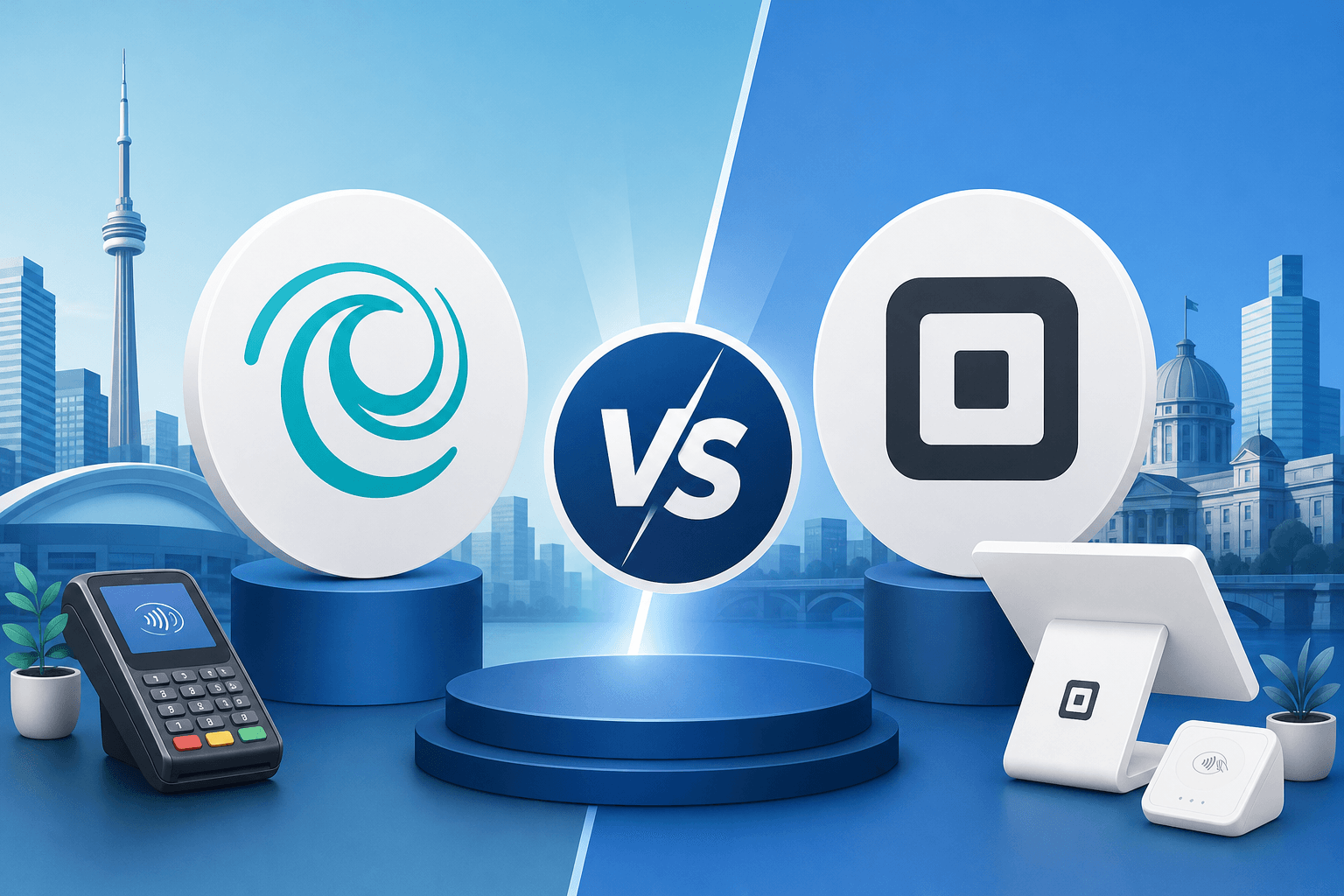
Moneris vs Square Canada: Which Payment Processor Wins in 2026?
If you're running a small or medium business in Canada, choosing a payment processor can feel like picking between two confusing cell phone plans - lots of fine print, a dozen "it depends" answers, and a nagging feeling you're overpaying. Two names dominate the conversation more than almost any other: Moneris, Canada's homegrown processing giant, and Square, the sleek U.S.-born platform that's become a favorite with mobile-first and retail businesses alike.
Both companies promise simplicity. Both claim to be the best fit for Canadian entrepreneurs. But in 2026, with interchange rates shifting, e-commerce growing faster than ever, and more Canadian businesses demanding transparent pricing, the gap between these two processors matters more than it used to. Picking the wrong one could cost you thousands of dollars a year in unnecessary fees - or leave you stuck with hardware and support that doesn't match how your business actually operates.
In this guide, we'll break down the Moneris vs Square Canada debate from every angle that matters: pricing, hardware, contracts, customer support, and industry fit. By the end, you'll know exactly which processor deserves a spot in your business - or whether a third option might serve you even better.
Moneris vs Square Canada: The Quick Overview
Before diving into the details, here's the high-level picture:
- Moneris is Canada's largest payment processor, co-owned by RBC and BMO. It's built specifically for the Canadian market, with deep integration into Canadian banking, strong in-person retail and restaurant tools, and decades of experience handling CAD transactions and Canadian tax compliance.
- Square is a U.S.-based fintech company that expanded into Canada with a simplified, flat-rate pricing model and slick point-of-sale hardware. It's especially popular with newer businesses, mobile vendors, and those who want to start accepting payments within minutes.
Both process Visa, Mastercard, and Interac transactions in Canada. Both offer POS hardware, online invoicing, and e-commerce tools. But how they charge you - and how they treat you as a customer - differs substantially.
Pricing and Fees: Where the Real Difference Lives
Pricing is almost always the deciding factor for Canadian business owners, and it's also where Moneris and Square diverge the most.
Square's Flat-Rate Model
Square uses flat-rate pricing, typically 2.65% per tapped, dipped, or swiped transaction in Canada, with slightly higher rates for manually keyed-in or online transactions. The appeal is obvious: no monthly fees, no long-term contract, and total transparency on your statement. For a coffee shop doing $3,000 a month in card sales, that simplicity can be worth something.
But flat-rate pricing has a hidden cost for growing businesses - it doesn't improve as your volume increases. Whether you're processing $5,000 or $150,000 a month, your rate largely stays the same. This is very similar to how Stripe operates, and if you're also evaluating that option, our Stripe comparison breaks down the tradeoffs in more detail.
Moneris's Interchange-Plus and Tiered Options
Moneris offers more pricing structures, including tiered pricing and interchange-plus pricing. Interchange-plus is widely considered the most transparent and often the most cost-effective option for established businesses, because you pay the actual interchange rate set by Visa/Mastercard plus a small, fixed markup - rather than a flat rate that bakes in extra margin regardless of card type.
For a business processing significant monthly volume, this can mean real savings. The tradeoff is that Moneris pricing is often quoted business-by-business, which means you need to actually compare offers rather than relying on a single advertised number.
Bottom line: Square is simpler and more predictable at low volume. Moneris can be significantly cheaper at scale, especially with an interchange-plus agreement. If you're unsure where your business falls, use our savings calculator to see the real dollar difference based on your actual monthly processing volume.
Hardware and Point-of-Sale Experience
Square Hardware
Square built its reputation on hardware that just works. The Square Reader, Square Terminal, and Square Register are plug-and-play, require minimal setup, and come with an intuitive app-based interface. For food trucks, pop-up shops, farmers' market vendors, and solo entrepreneurs, this is a huge advantage.
Moneris Hardware
Moneris terminals are built for durability and high-volume retail and restaurant environments. They integrate tightly with Canadian debit (Interac Flash), support complex tipping and tab structures, and are often bundled with full POS systems for multi-location businesses. If you're running a restaurant with split bills, modifiers, and tableside ordering, Moneris (or a POS partner built on top of it) tends to handle those workflows more robustly. Our restaurant solutions page covers what to look for specifically in food service setups.
For retail businesses juggling inventory, barcode scanning, and multi-register setups, both processors can work - but the right fit depends heavily on your existing POS software. If you're POS shopping at the same time, it's worth reading our Clover comparison and Lightspeed comparison, since many Canadian retailers pair Moneris or Square with one of these systems rather than using the processor's native hardware alone. Our retail solutions page can help you map out the full setup.
Contracts, Fees, and Flexibility
One of the biggest historical complaints about Moneris - and Canadian processors generally - has been long-term contracts with early termination fees. This has improved in recent years as competition has increased, but it's still common to see 3-year agreements with cancellation penalties if you don't negotiate carefully.
Square, by contrast, has no contracts. You can start and stop processing at any time with no penalty. This makes Square genuinely appealing for seasonal businesses, new ventures testing the waters, or anyone who wants maximum flexibility.
That said, "no contract" doesn't automatically mean "cheapest." A lot of Canadian business owners get drawn in by Square's simplicity and end up overpaying once their volume grows past the point where flat-rate pricing makes sense. If you're currently locked into a contract with another provider and wondering about your options, it's worth having a conversation before you assume you're stuck - contact our team and we'll walk through what switching actually looks like.
Industry Fit: Which Processor Matches Your Business?
Not every business has the same needs, and this is where the Moneris vs Square Canada decision really comes down to specifics rather than generic pricing comparisons.
Best for Square
- Mobile businesses and vendors (food trucks, markets, pop-ups)
- New businesses with uncertain or seasonal volume
- Service providers who need simple invoicing and online booking
- Solo operators in salon and spa businesses who want an all-in-one app
Best for Moneris
- Established restaurants with complex POS needs - see our restaurant solutions
- Multi-location retail chains - see our retail solutions
- Healthcare and clinic settings requiring secure, compliant payment handling - see our healthcare solutions
- Construction and field-service businesses needing invoicing plus in-person payments - see our construction solutions
- Automotive shops processing larger average ticket sizes - see our automotive solutions
- Hotels and hospitality businesses needing integrated booking and payment systems - see our hospitality solutions
- Nonprofits processing donations at scale, where interchange-plus pricing can meaningfully reduce costs - see our nonprofit solutions
If your business sells online as well as in person, both processors offer e-commerce tools, but the right integration depends on your existing website platform and order volume. Check out our e-commerce solutions page for guidance on matching your online store to the right backend.
Customer Support and the Canadian Advantage
This is an area where Moneris has a structural edge simply by being Canadian. Support is available in English and French, built around Canadian banking hours and holidays, and staffed by teams familiar with Canadian tax rules, GST/HST handling, and Interac-specific issues.
Square's support has improved significantly over the years, but as a U.S.-headquartered company, some Canadian merchants report longer wait times or less familiarity with Canada-specific nuances, particularly around CRA reporting requirements and cross-border e-commerce tax questions.
If you're based in a major Canadian market, local considerations also come into play. Businesses in Toronto, Vancouver, Calgary, Montreal, and Ottawa all have slightly different processor landscapes depending on regional banking relationships and local competition, so it's worth checking what's available in your specific city.
And if you're in Quebec, don't overlook the role of credit unions - many Quebec businesses compare Moneris against Desjardins specifically because of Desjardins's strong regional presence and bilingual support infrastructure.
Beyond Moneris and Square: Other Processors Worth Considering
While this article focuses on the Moneris vs Square Canada matchup, they're not the only two options. Depending on your situation, it may also be worth looking at:
- TD - a solid choice if you already bank with TD and want bundled services; see our TD comparison
- Chase Paymentech - geared toward larger, enterprise-level processing volumes; see our Chase comparison
- Stripe - a strong fit for developers and online-first businesses; see our Stripe comparison
For a side-by-side look at all your options in one place, our Compare processors page lays out the key differences without the sales pitch.
Making the Final Decision
So, who actually wins the Moneris vs Square Canada comparison in 2026? Honestly, it depends on where your business sits today - and where it's headed.
- If you're brand new, processing under $10,000 a month, and want zero commitment, Square's simplicity is hard to beat.
- If you're established, processing meaningful monthly volume, or running a business with complex POS needs like a restaurant, multi-location retail store, or healthcare clinic, Moneris's interchange-plus pricing and Canadian-built infrastructure will likely save you more money and support your growth better.
The only way to know for sure is to run the numbers on your actual transaction mix. Pricing structures are complicated by design, and the "cheaper" option on paper isn't always cheaper in practice once you factor in your card mix, average ticket size, and monthly volume.
Take the Next Step
Don't guess - calculate. Before committing to either processor, take ten minutes to see what you'd actually pay with each pricing model. Use our savings calculator to compare your current costs against Moneris, Square, and other Canadian processors side by side.
If you'd rather talk it through with a real person who understands the Canadian payments landscape, get a free quote tailored to your business type, volume, and location, or contact our team directly - we work with Canadian businesses every day to find the processor that actually fits, not just the one with the flashiest marketing. Explore our services to see how PaymentsPlus helps Canadian businesses cut processing costs without cutting corners.